Many junior SEOs make the same mistake: they chase high search volume, assuming it means long-term opportunity. But search volume alone is completely misleading.
A keyword with 50,000 searches/month sounds like a goldmine, until you realize it’s already in decline. Investing in a fading trend is like buying MySpace stock today.
Every keyword follows a lifecycle moving through these distinct phases:
- Intro stage – Early interest, but not mainstream yet
- Surge & peak – Explosive growth and peak visibility
- Sustained growth – Long-term, steady momentum
- Plateau – Growth levels off, demand stabilizes
- Resurgence / seasonality – Demand spikes again, either cyclically or unexpectedly
- Decline – Gradual loss of interest over time
- Niche survival or extinction – Either a small, steady demand remains, or the keyword disappears entirely
If you don’t know where a keyword is in this cycle, you’re flying blind.
This post breaks down each phase, the patterns behind them, and how to spot emerging opportunities before your competitors do.
Let’s dig in.
search demand is still low, but early adopters are starting to take interest.
At this stage, a topic’s future is uncertain.
It might gain traction and surge in popularity, or it might fizzle out before reaching mainstream awareness. The key is identifying which trends have real potential.
Here’s what to look out for:
Pre-peak growth – An exponential increase in search interest before reaching a tipping point.
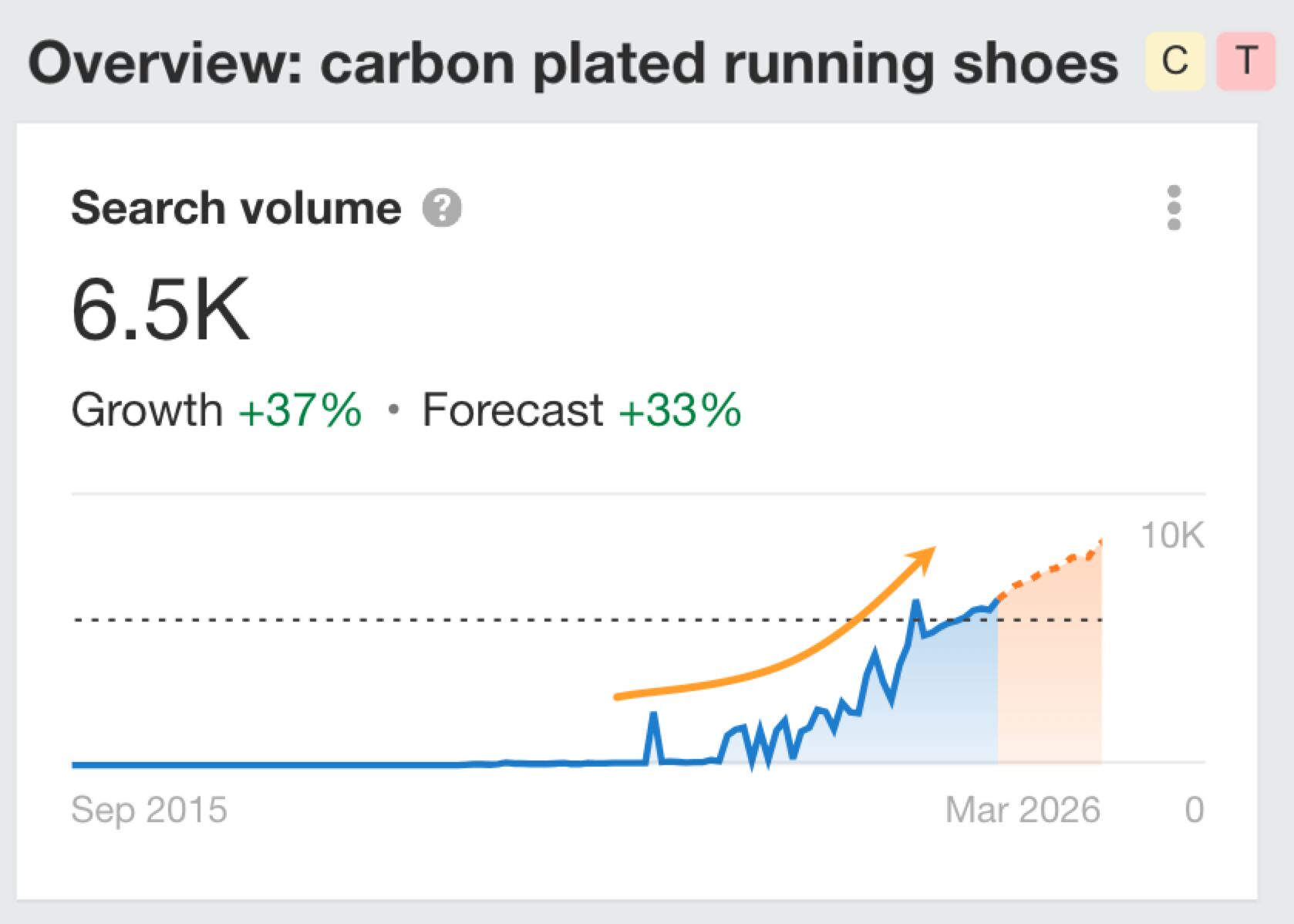
Steady growth – A slow but consistent upward trajectory.

Early virality / launch-related growth – A steep incline due to a product launch, social media trend, or PR push.
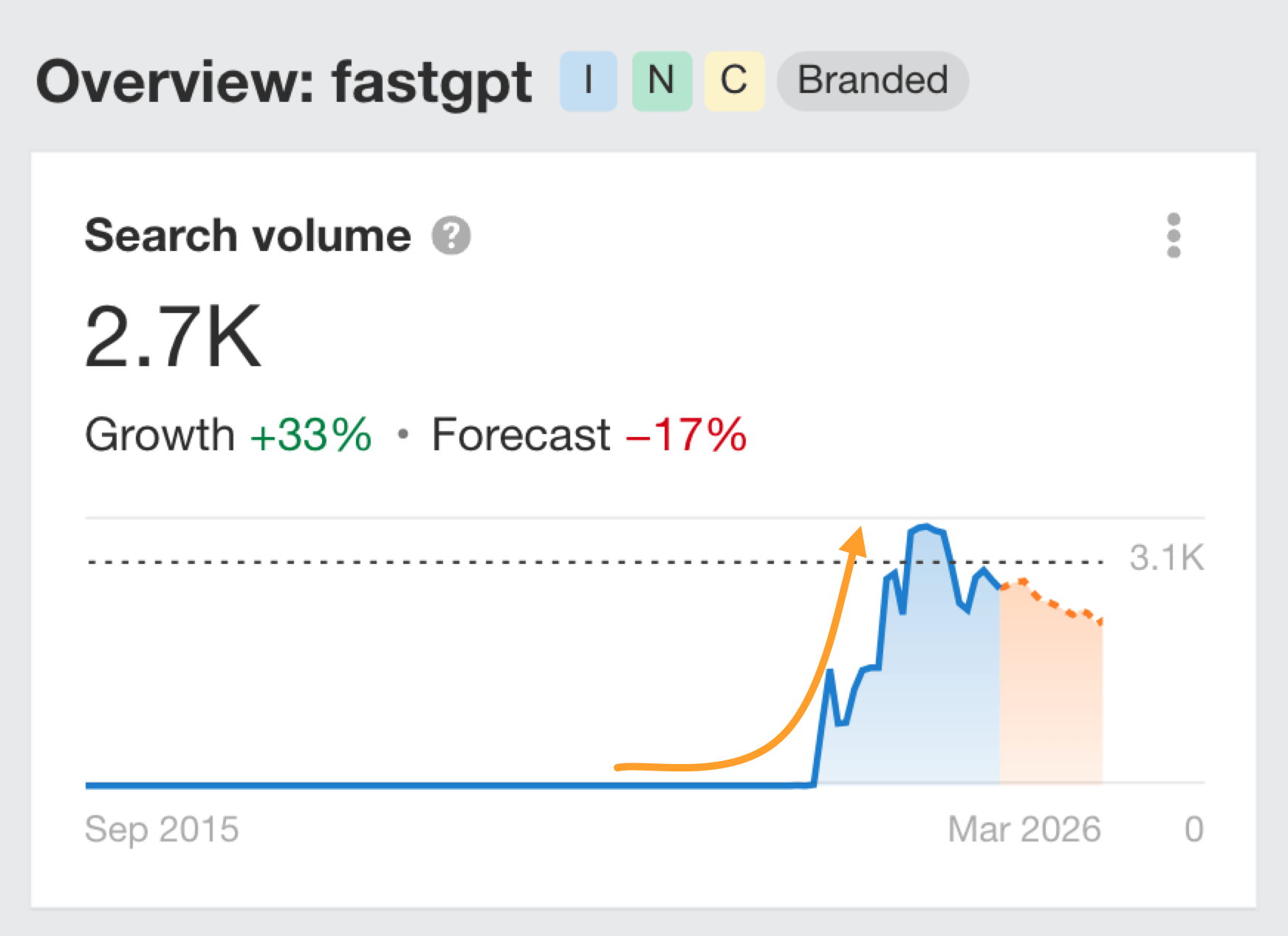
Keywords in this stage can stay under the radar for months or even years. Some take off quickly, while others require sustained marketing or a major industry shift to gain momentum.
SEO strategy for the intro stage
- Look beyond search volume – Topics in this stage have low search volume and require a leap of faith, trusting intuition, and real-world trends over keyword data, but their potential lies in early adoption.
- Monitor industry signals – Pay attention to product launches, investor funding, and expert discussions that hint at future demand.
- Create foundational content early – Publishing now can establish authority before competition floods in.
Many breakout trends start unnoticed. The best SEOs don’t wait until a keyword is trending, they invest before the surge begins.
optimize existing content that can likely rank quickly, allowing you to capture traffic while demand is high.
Evaluate long-term potential – Not every spike is worth chasing. Hype-driven trends fade fast. A short-lived search trend may only spike for a handful of months, whereas a topic that grows over 12+ months has greater long-term longevity.
Plan for post-peak shifts – Many keywords evolve after their peak. Look for ways to pivot content toward related evergreen topics to maintain relevance.
Riding a surge successfully requires speed and strategy. The best SEOs know when to capitalize on a trend and when to avoid short-lived fads that won’t hold long-term value.
build website authority and own the topic before competitors catch on.
Here’s what to look out for:
Peaking growth – A keyword has surged but is still increasing, though at a slower pace than before.
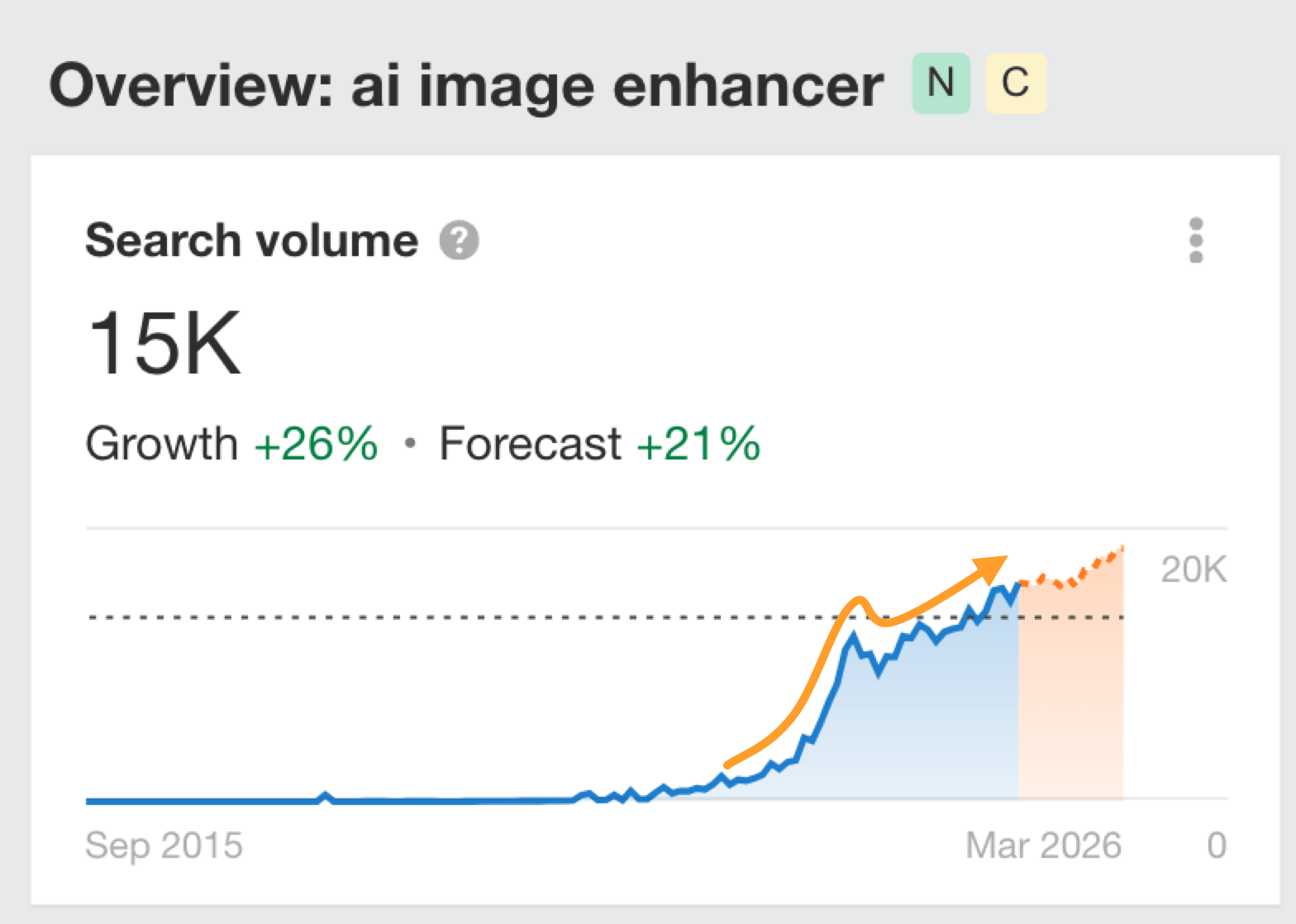
Gradual growth – A keyword experiences a steady upward trend with minor fluctuations.
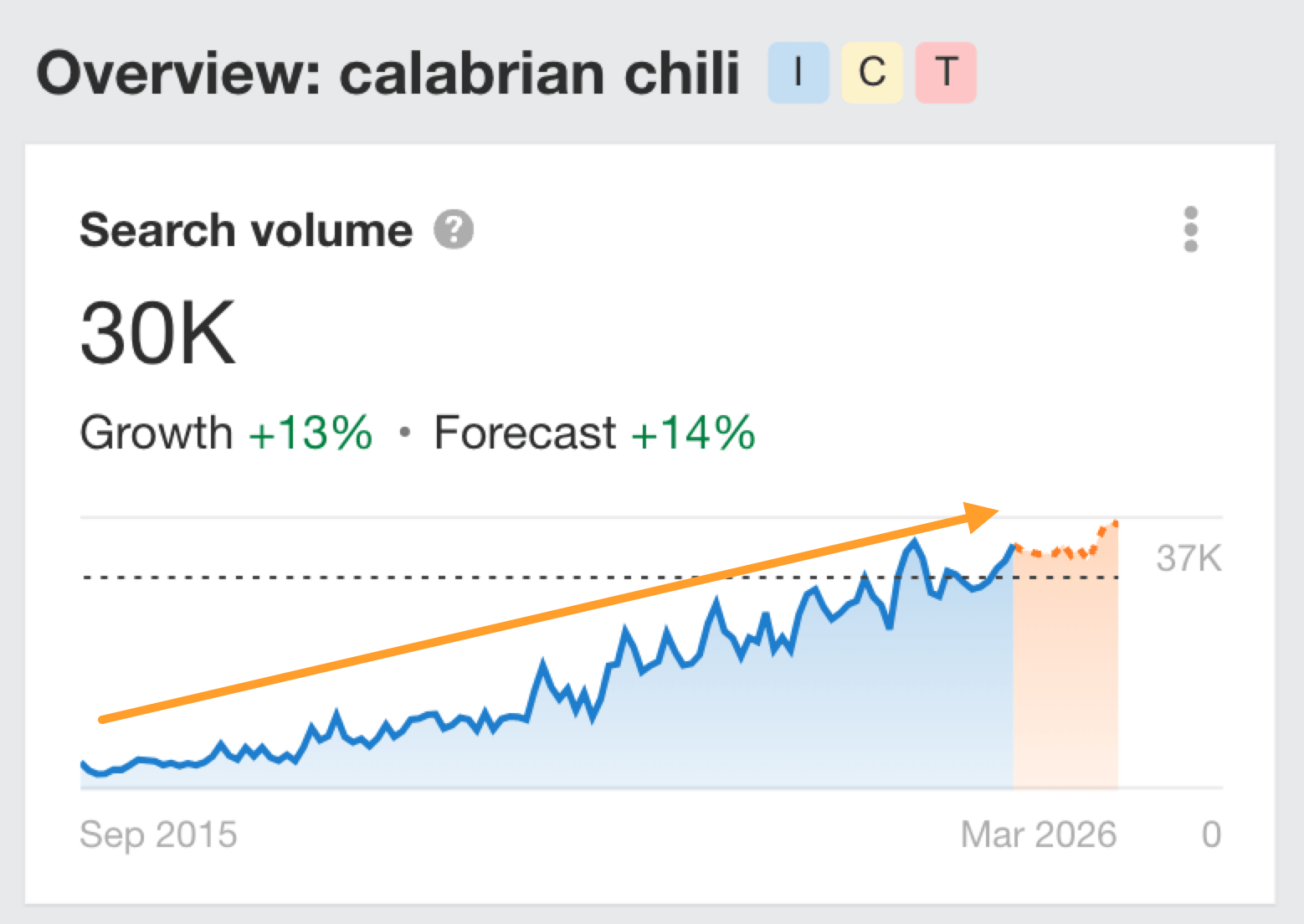
Post-peak growth – After an initial peak, the keyword starts stabilizing at a higher level than before the peak.
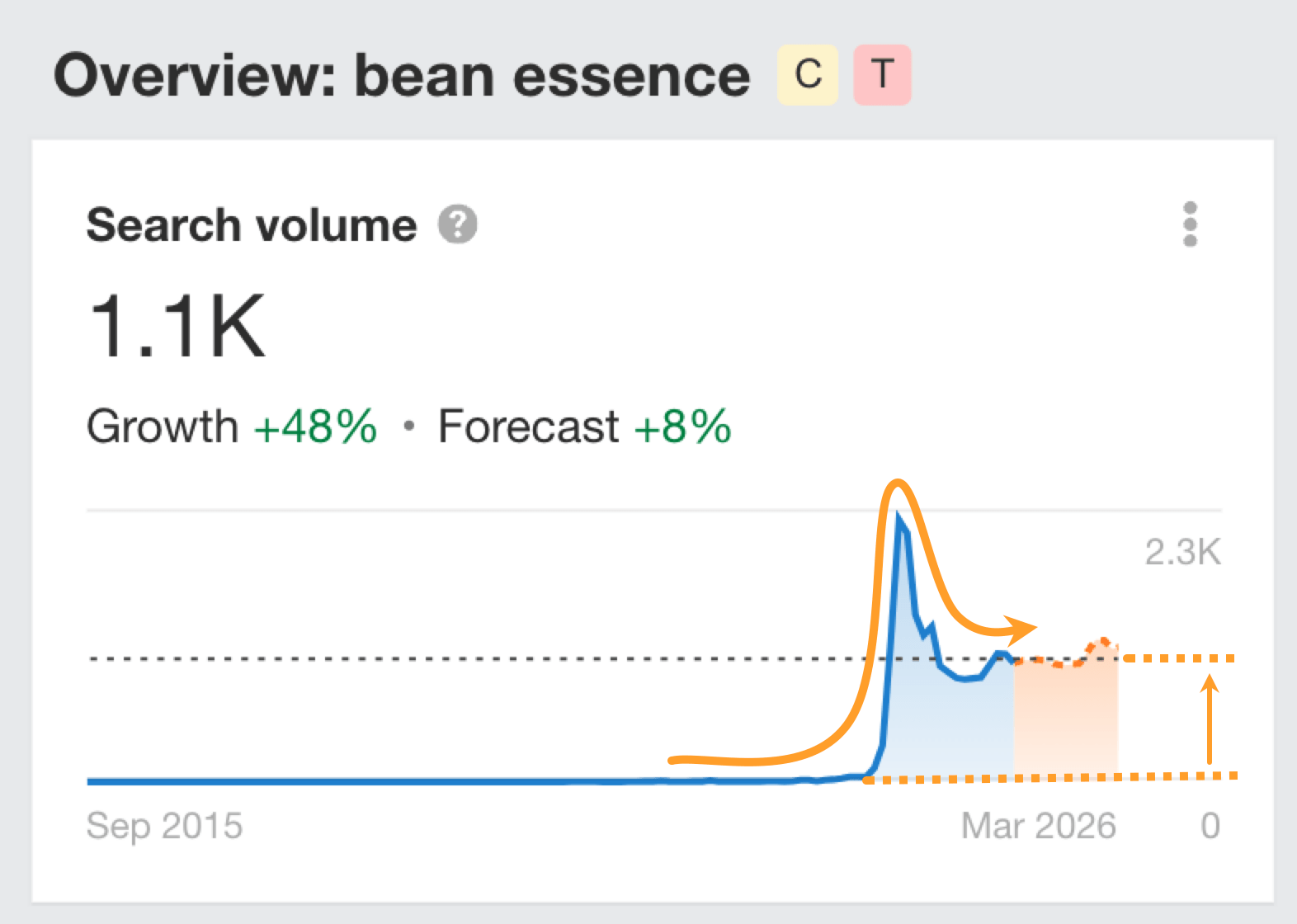
Topics in this phase have already proven their demand and are less likely to decline suddenly. The longer a keyword maintains steady growth, the more likely it is to become an evergreen topic.
However, not all topics with sustained growth remain strong forever. Understanding their trajectory is key to making the right content and optimization decisions.
SEO strategy for sustained growth
- Double down on authority – These keywords have long-lasting value. Invest in pillar content, supporting pages, and ongoing optimization to secure rankings.
- Monitor shifts in demand – Some keywords maintain slow growth indefinitely, while others may begin plateauing. Keep an eye on changes in search demand, intent, and competition.
- Consider content expansion – If a keyword has proven staying power, explore related subtopics to increase visibility and topic coverage.
Long-term growth topics compound in value over time. SEOs who invest in them early and consistently can build strong, defensible rankings that drive sustained traffic.
holiday-related searches that peak at the same time every year. Others are driven by unpredictable external events, making them harder to plan for but valuable when spotted early.
SEO strategy for resurgence & seasonality
- Use seasonal trends – If a topic surges predictably, create seasonal content refreshes and promotional campaigns ahead of time.
- Monitor news and social media – Unexpected resurgences are often driven by viral moments. Being first to react can capture huge search interest and visibility in Google News or Discover.
- Align link building with surges – If a topic has predictable peaks or is actively resurging, it’s a great time to build links and ride the topic’s popularity in the moment.
Resurgence and seasonality create huge opportunities for traffic if you know when to act. The best SEOs anticipate demand before it happens and position their content accordingly.
Keywords Explorer and navigate to the Overview tab.

That’s where all the above screenshots have been taken from. It shows you the keyword’s demand history and demand forecast for upcoming months.
For a larger group of keywords, you can instead use the growth filters in the Matching Terms report:
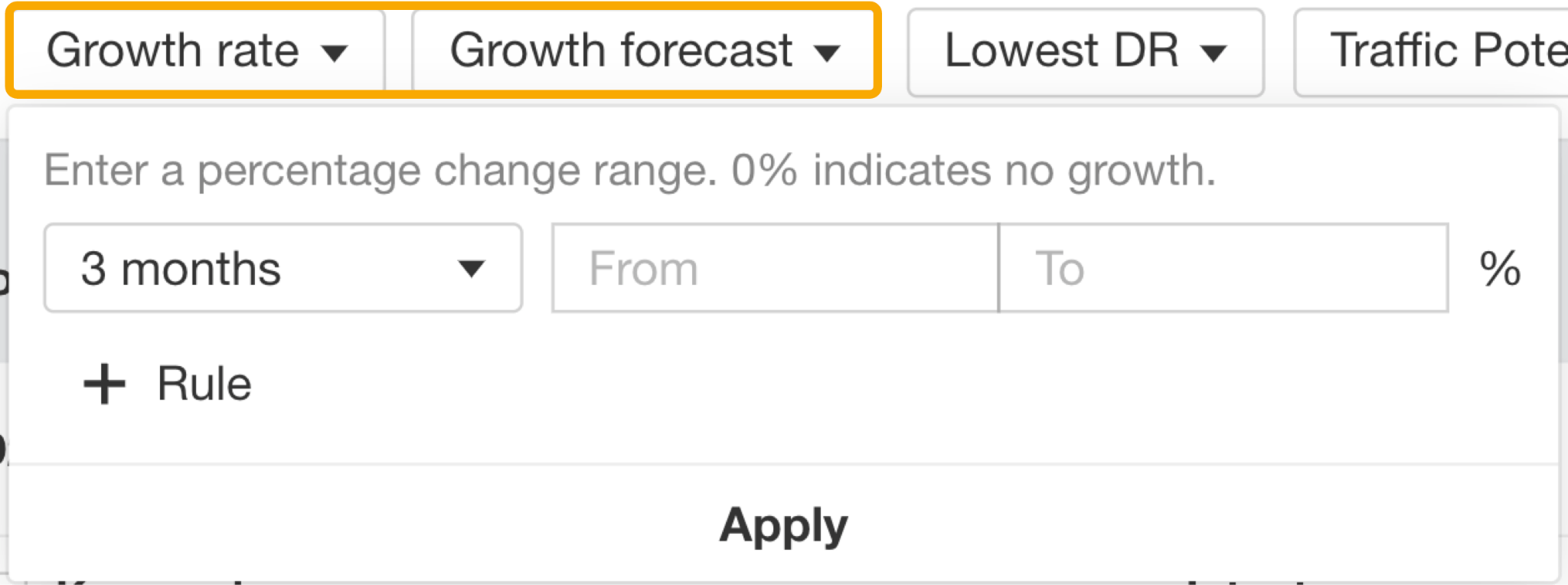
With the Growth Rate filter, you can remove keywords that might be declining or exhibiting high-risk signals you don’t want to target in the long term.
With the Growth Forecast filter, you can identify keywords that will continue trending and growing.
Final thoughts
Search demand isn’t static; it moves through predictable phases. SEOs who track these shifts can spot rising trends early, avoid wasting resources on fading topics, and invest in content that will drive long-term results.
Most SEO specialists only look at search volume today, but the real winners in SEO think about where demand is going next.
To stay ahead, always ask yourself: is this topic growing, peaking, plateauing, or fading? The future of your SEO strategy depends on it.
Similar Posts

The Coinbase Outage Was Our Warning…
Coinbase is not a place to hold crypto. It’s an exchange, not a wallet. And the outage…

Top Brand Visibility Factors in ChatGPT, AI Mode, and AI Overviews (75k Brands Studied)
Expanding on one of our most popular AI Overview studies, we’ve analyzed 75,000 brands to see which…

🚨Stop Storing Crypto on Exchanges!
A crypto exchange is not a secure method for storing your crypto. Here are some reasons why….

Understanding digital marketing: explaining the basics
When you’re running an online store, digital marketing is at the center of nearly everything you do….

Before You Lose Your Crypto, Watch This!
Ledger Wallet Deal: https://shop.ledger.com/r/cyber-scrillar=f3f59e340ecb Ledger Wallet Reviews:Gen 5: https://youtu.be/D7a0BuEgbRA?si=Tyx5paWjYzcDjYEfFlex: https://youtu.be/xqtdxg4XEAo?si=8jmNsVHTvTR81e2cStax: https://youtu.be/ifpN08RaRwE?si=HHD918la00FKvs1OComparing All Models: https://youtu.be/HtyLDYT6CQI?si=iK_5LynIUHbxDiKG Ledger Wallet User…

5 Signs You’re Using Tangem Wrong
Get Tangem (30% off & free Bitcoin): https://tangem.com/pricing/?promocode=CYBERSCRILLA&promocode=NYEXTRA26 Tangem Wallet User Guide: https://youtu.be/9igpzsN8ldY?si=B2yOHCOiugmEvUqX Metal Seed Phrase Plate…
At this stage, a topic’s future is uncertain.
It might gain traction and surge in popularity, or it might fizzle out before reaching mainstream awareness. The key is identifying which trends have real potential.
Here’s what to look out for:
Pre-peak growth – An exponential increase in search interest before reaching a tipping point.
Steady growth – A slow but consistent upward trajectory.
Early virality / launch-related growth – A steep incline due to a product launch, social media trend, or PR push.
Keywords in this stage can stay under the radar for months or even years. Some take off quickly, while others require sustained marketing or a major industry shift to gain momentum.
SEO strategy for the intro stage
- Look beyond search volume – Topics in this stage have low search volume and require a leap of faith, trusting intuition, and real-world trends over keyword data, but their potential lies in early adoption.
- Monitor industry signals – Pay attention to product launches, investor funding, and expert discussions that hint at future demand.
- Create foundational content early – Publishing now can establish authority before competition floods in.
Many breakout trends start unnoticed. The best SEOs don’t wait until a keyword is trending, they invest before the surge begins.
optimize existing content that can likely rank quickly, allowing you to capture traffic while demand is high.
Evaluate long-term potential – Not every spike is worth chasing. Hype-driven trends fade fast. A short-lived search trend may only spike for a handful of months, whereas a topic that grows over 12+ months has greater long-term longevity.
Plan for post-peak shifts – Many keywords evolve after their peak. Look for ways to pivot content toward related evergreen topics to maintain relevance.
Riding a surge successfully requires speed and strategy. The best SEOs know when to capitalize on a trend and when to avoid short-lived fads that won’t hold long-term value.
build website authority and own the topic before competitors catch on.
Here’s what to look out for:
Peaking growth – A keyword has surged but is still increasing, though at a slower pace than before.
Gradual growth – A keyword experiences a steady upward trend with minor fluctuations.
Post-peak growth – After an initial peak, the keyword starts stabilizing at a higher level than before the peak.
Topics in this phase have already proven their demand and are less likely to decline suddenly. The longer a keyword maintains steady growth, the more likely it is to become an evergreen topic.
However, not all topics with sustained growth remain strong forever. Understanding their trajectory is key to making the right content and optimization decisions.
SEO strategy for sustained growth
- Double down on authority – These keywords have long-lasting value. Invest in pillar content, supporting pages, and ongoing optimization to secure rankings.
- Monitor shifts in demand – Some keywords maintain slow growth indefinitely, while others may begin plateauing. Keep an eye on changes in search demand, intent, and competition.
- Consider content expansion – If a keyword has proven staying power, explore related subtopics to increase visibility and topic coverage.
Long-term growth topics compound in value over time. SEOs who invest in them early and consistently can build strong, defensible rankings that drive sustained traffic.
holiday-related searches that peak at the same time every year. Others are driven by unpredictable external events, making them harder to plan for but valuable when spotted early.
SEO strategy for resurgence & seasonality
- Use seasonal trends – If a topic surges predictably, create seasonal content refreshes and promotional campaigns ahead of time.
- Monitor news and social media – Unexpected resurgences are often driven by viral moments. Being first to react can capture huge search interest and visibility in Google News or Discover.
- Align link building with surges – If a topic has predictable peaks or is actively resurging, it’s a great time to build links and ride the topic’s popularity in the moment.
Resurgence and seasonality create huge opportunities for traffic if you know when to act. The best SEOs anticipate demand before it happens and position their content accordingly.
Keywords Explorer and navigate to the Overview tab.
That’s where all the above screenshots have been taken from. It shows you the keyword’s demand history and demand forecast for upcoming months.
For a larger group of keywords, you can instead use the growth filters in the Matching Terms report:
With the Growth Rate filter, you can remove keywords that might be declining or exhibiting high-risk signals you don’t want to target in the long term.
With the Growth Forecast filter, you can identify keywords that will continue trending and growing.
Final thoughts
Search demand isn’t static; it moves through predictable phases. SEOs who track these shifts can spot rising trends early, avoid wasting resources on fading topics, and invest in content that will drive long-term results.
Most SEO specialists only look at search volume today, but the real winners in SEO think about where demand is going next.
To stay ahead, always ask yourself: is this topic growing, peaking, plateauing, or fading? The future of your SEO strategy depends on it.
Similar Posts
The Coinbase Outage Was Our Warning…
Coinbase is not a place to hold crypto. It’s an exchange, not a wallet. And the outage…
Top Brand Visibility Factors in ChatGPT, AI Mode, and AI Overviews (75k Brands Studied)
Expanding on one of our most popular AI Overview studies, we’ve analyzed 75,000 brands to see which…
🚨Stop Storing Crypto on Exchanges!
A crypto exchange is not a secure method for storing your crypto. Here are some reasons why….
Understanding digital marketing: explaining the basics
When you’re running an online store, digital marketing is at the center of nearly everything you do….
Before You Lose Your Crypto, Watch This!
Ledger Wallet Deal: https://shop.ledger.com/r/cyber-scrillar=f3f59e340ecb Ledger Wallet Reviews:Gen 5: https://youtu.be/D7a0BuEgbRA?si=Tyx5paWjYzcDjYEfFlex: https://youtu.be/xqtdxg4XEAo?si=8jmNsVHTvTR81e2cStax: https://youtu.be/ifpN08RaRwE?si=HHD918la00FKvs1OComparing All Models: https://youtu.be/HtyLDYT6CQI?si=iK_5LynIUHbxDiKG Ledger Wallet User…
5 Signs You’re Using Tangem Wrong
Get Tangem (30% off & free Bitcoin): https://tangem.com/pricing/?promocode=CYBERSCRILLA&promocode=NYEXTRA26 Tangem Wallet User Guide: https://youtu.be/9igpzsN8ldY?si=B2yOHCOiugmEvUqX Metal Seed Phrase Plate…
Riding a surge successfully requires speed and strategy. The best SEOs know when to capitalize on a trend and when to avoid short-lived fads that won’t hold long-term value.
build website authority and own the topic before competitors catch on.
Here’s what to look out for:
Peaking growth – A keyword has surged but is still increasing, though at a slower pace than before.
Gradual growth – A keyword experiences a steady upward trend with minor fluctuations.
Post-peak growth – After an initial peak, the keyword starts stabilizing at a higher level than before the peak.
Topics in this phase have already proven their demand and are less likely to decline suddenly. The longer a keyword maintains steady growth, the more likely it is to become an evergreen topic.
However, not all topics with sustained growth remain strong forever. Understanding their trajectory is key to making the right content and optimization decisions.
SEO strategy for sustained growth
- Double down on authority – These keywords have long-lasting value. Invest in pillar content, supporting pages, and ongoing optimization to secure rankings.
- Monitor shifts in demand – Some keywords maintain slow growth indefinitely, while others may begin plateauing. Keep an eye on changes in search demand, intent, and competition.
- Consider content expansion – If a keyword has proven staying power, explore related subtopics to increase visibility and topic coverage.
Long-term growth topics compound in value over time. SEOs who invest in them early and consistently can build strong, defensible rankings that drive sustained traffic.
holiday-related searches that peak at the same time every year. Others are driven by unpredictable external events, making them harder to plan for but valuable when spotted early.
SEO strategy for resurgence & seasonality
- Use seasonal trends – If a topic surges predictably, create seasonal content refreshes and promotional campaigns ahead of time.
- Monitor news and social media – Unexpected resurgences are often driven by viral moments. Being first to react can capture huge search interest and visibility in Google News or Discover.
- Align link building with surges – If a topic has predictable peaks or is actively resurging, it’s a great time to build links and ride the topic’s popularity in the moment.
Resurgence and seasonality create huge opportunities for traffic if you know when to act. The best SEOs anticipate demand before it happens and position their content accordingly.
Keywords Explorer and navigate to the Overview tab.
That’s where all the above screenshots have been taken from. It shows you the keyword’s demand history and demand forecast for upcoming months.
For a larger group of keywords, you can instead use the growth filters in the Matching Terms report:
With the Growth Rate filter, you can remove keywords that might be declining or exhibiting high-risk signals you don’t want to target in the long term.
With the Growth Forecast filter, you can identify keywords that will continue trending and growing.
Final thoughts
Search demand isn’t static; it moves through predictable phases. SEOs who track these shifts can spot rising trends early, avoid wasting resources on fading topics, and invest in content that will drive long-term results.
Most SEO specialists only look at search volume today, but the real winners in SEO think about where demand is going next.
To stay ahead, always ask yourself: is this topic growing, peaking, plateauing, or fading? The future of your SEO strategy depends on it.
Similar Posts
The Coinbase Outage Was Our Warning…
Coinbase is not a place to hold crypto. It’s an exchange, not a wallet. And the outage…
Top Brand Visibility Factors in ChatGPT, AI Mode, and AI Overviews (75k Brands Studied)
Expanding on one of our most popular AI Overview studies, we’ve analyzed 75,000 brands to see which…
🚨Stop Storing Crypto on Exchanges!
A crypto exchange is not a secure method for storing your crypto. Here are some reasons why….
Understanding digital marketing: explaining the basics
When you’re running an online store, digital marketing is at the center of nearly everything you do….
Before You Lose Your Crypto, Watch This!
Ledger Wallet Deal: https://shop.ledger.com/r/cyber-scrillar=f3f59e340ecb Ledger Wallet Reviews:Gen 5: https://youtu.be/D7a0BuEgbRA?si=Tyx5paWjYzcDjYEfFlex: https://youtu.be/xqtdxg4XEAo?si=8jmNsVHTvTR81e2cStax: https://youtu.be/ifpN08RaRwE?si=HHD918la00FKvs1OComparing All Models: https://youtu.be/HtyLDYT6CQI?si=iK_5LynIUHbxDiKG Ledger Wallet User…
5 Signs You’re Using Tangem Wrong
Get Tangem (30% off & free Bitcoin): https://tangem.com/pricing/?promocode=CYBERSCRILLA&promocode=NYEXTRA26 Tangem Wallet User Guide: https://youtu.be/9igpzsN8ldY?si=B2yOHCOiugmEvUqX Metal Seed Phrase Plate…
Here’s what to look out for:
Peaking growth – A keyword has surged but is still increasing, though at a slower pace than before.
Gradual growth – A keyword experiences a steady upward trend with minor fluctuations.
Post-peak growth – After an initial peak, the keyword starts stabilizing at a higher level than before the peak.
Topics in this phase have already proven their demand and are less likely to decline suddenly. The longer a keyword maintains steady growth, the more likely it is to become an evergreen topic.
However, not all topics with sustained growth remain strong forever. Understanding their trajectory is key to making the right content and optimization decisions.
SEO strategy for sustained growth
- Double down on authority – These keywords have long-lasting value. Invest in pillar content, supporting pages, and ongoing optimization to secure rankings.
- Monitor shifts in demand – Some keywords maintain slow growth indefinitely, while others may begin plateauing. Keep an eye on changes in search demand, intent, and competition.
- Consider content expansion – If a keyword has proven staying power, explore related subtopics to increase visibility and topic coverage.
Long-term growth topics compound in value over time. SEOs who invest in them early and consistently can build strong, defensible rankings that drive sustained traffic.
holiday-related searches that peak at the same time every year. Others are driven by unpredictable external events, making them harder to plan for but valuable when spotted early.
SEO strategy for resurgence & seasonality
- Use seasonal trends – If a topic surges predictably, create seasonal content refreshes and promotional campaigns ahead of time.
- Monitor news and social media – Unexpected resurgences are often driven by viral moments. Being first to react can capture huge search interest and visibility in Google News or Discover.
- Align link building with surges – If a topic has predictable peaks or is actively resurging, it’s a great time to build links and ride the topic’s popularity in the moment.
Resurgence and seasonality create huge opportunities for traffic if you know when to act. The best SEOs anticipate demand before it happens and position their content accordingly.
Keywords Explorer and navigate to the Overview tab.
That’s where all the above screenshots have been taken from. It shows you the keyword’s demand history and demand forecast for upcoming months.
For a larger group of keywords, you can instead use the growth filters in the Matching Terms report:
With the Growth Rate filter, you can remove keywords that might be declining or exhibiting high-risk signals you don’t want to target in the long term.
With the Growth Forecast filter, you can identify keywords that will continue trending and growing.
Final thoughts
Search demand isn’t static; it moves through predictable phases. SEOs who track these shifts can spot rising trends early, avoid wasting resources on fading topics, and invest in content that will drive long-term results.
Most SEO specialists only look at search volume today, but the real winners in SEO think about where demand is going next.
To stay ahead, always ask yourself: is this topic growing, peaking, plateauing, or fading? The future of your SEO strategy depends on it.
Similar Posts
The Coinbase Outage Was Our Warning…
Coinbase is not a place to hold crypto. It’s an exchange, not a wallet. And the outage…
Top Brand Visibility Factors in ChatGPT, AI Mode, and AI Overviews (75k Brands Studied)
Expanding on one of our most popular AI Overview studies, we’ve analyzed 75,000 brands to see which…
🚨Stop Storing Crypto on Exchanges!
A crypto exchange is not a secure method for storing your crypto. Here are some reasons why….
Understanding digital marketing: explaining the basics
When you’re running an online store, digital marketing is at the center of nearly everything you do….
Before You Lose Your Crypto, Watch This!
Ledger Wallet Deal: https://shop.ledger.com/r/cyber-scrillar=f3f59e340ecb Ledger Wallet Reviews:Gen 5: https://youtu.be/D7a0BuEgbRA?si=Tyx5paWjYzcDjYEfFlex: https://youtu.be/xqtdxg4XEAo?si=8jmNsVHTvTR81e2cStax: https://youtu.be/ifpN08RaRwE?si=HHD918la00FKvs1OComparing All Models: https://youtu.be/HtyLDYT6CQI?si=iK_5LynIUHbxDiKG Ledger Wallet User…
5 Signs You’re Using Tangem Wrong
Get Tangem (30% off & free Bitcoin): https://tangem.com/pricing/?promocode=CYBERSCRILLA&promocode=NYEXTRA26 Tangem Wallet User Guide: https://youtu.be/9igpzsN8ldY?si=B2yOHCOiugmEvUqX Metal Seed Phrase Plate…
SEO strategy for resurgence & seasonality
- Use seasonal trends – If a topic surges predictably, create seasonal content refreshes and promotional campaigns ahead of time.
- Monitor news and social media – Unexpected resurgences are often driven by viral moments. Being first to react can capture huge search interest and visibility in Google News or Discover.
- Align link building with surges – If a topic has predictable peaks or is actively resurging, it’s a great time to build links and ride the topic’s popularity in the moment.
Resurgence and seasonality create huge opportunities for traffic if you know when to act. The best SEOs anticipate demand before it happens and position their content accordingly.
Keywords Explorer and navigate to the Overview tab.
That’s where all the above screenshots have been taken from. It shows you the keyword’s demand history and demand forecast for upcoming months.
For a larger group of keywords, you can instead use the growth filters in the Matching Terms report:
With the Growth Rate filter, you can remove keywords that might be declining or exhibiting high-risk signals you don’t want to target in the long term.
With the Growth Forecast filter, you can identify keywords that will continue trending and growing.
Final thoughts
Search demand isn’t static; it moves through predictable phases. SEOs who track these shifts can spot rising trends early, avoid wasting resources on fading topics, and invest in content that will drive long-term results.
Most SEO specialists only look at search volume today, but the real winners in SEO think about where demand is going next.
To stay ahead, always ask yourself: is this topic growing, peaking, plateauing, or fading? The future of your SEO strategy depends on it.
That’s where all the above screenshots have been taken from. It shows you the keyword’s demand history and demand forecast for upcoming months.
For a larger group of keywords, you can instead use the growth filters in the Matching Terms report:
With the Growth Rate filter, you can remove keywords that might be declining or exhibiting high-risk signals you don’t want to target in the long term.
With the Growth Forecast filter, you can identify keywords that will continue trending and growing.
Final thoughts
Search demand isn’t static; it moves through predictable phases. SEOs who track these shifts can spot rising trends early, avoid wasting resources on fading topics, and invest in content that will drive long-term results.
Most SEO specialists only look at search volume today, but the real winners in SEO think about where demand is going next.
To stay ahead, always ask yourself: is this topic growing, peaking, plateauing, or fading? The future of your SEO strategy depends on it.
Similar Posts
The Coinbase Outage Was Our Warning…
Coinbase is not a place to hold crypto. It’s an exchange, not a wallet. And the outage…
Top Brand Visibility Factors in ChatGPT, AI Mode, and AI Overviews (75k Brands Studied)
Expanding on one of our most popular AI Overview studies, we’ve analyzed 75,000 brands to see which…
🚨Stop Storing Crypto on Exchanges!
A crypto exchange is not a secure method for storing your crypto. Here are some reasons why….
Understanding digital marketing: explaining the basics
When you’re running an online store, digital marketing is at the center of nearly everything you do….
Before You Lose Your Crypto, Watch This!
Ledger Wallet Deal: https://shop.ledger.com/r/cyber-scrillar=f3f59e340ecb Ledger Wallet Reviews:Gen 5: https://youtu.be/D7a0BuEgbRA?si=Tyx5paWjYzcDjYEfFlex: https://youtu.be/xqtdxg4XEAo?si=8jmNsVHTvTR81e2cStax: https://youtu.be/ifpN08RaRwE?si=HHD918la00FKvs1OComparing All Models: https://youtu.be/HtyLDYT6CQI?si=iK_5LynIUHbxDiKG Ledger Wallet User…
5 Signs You’re Using Tangem Wrong
Get Tangem (30% off & free Bitcoin): https://tangem.com/pricing/?promocode=CYBERSCRILLA&promocode=NYEXTRA26 Tangem Wallet User Guide: https://youtu.be/9igpzsN8ldY?si=B2yOHCOiugmEvUqX Metal Seed Phrase Plate…